
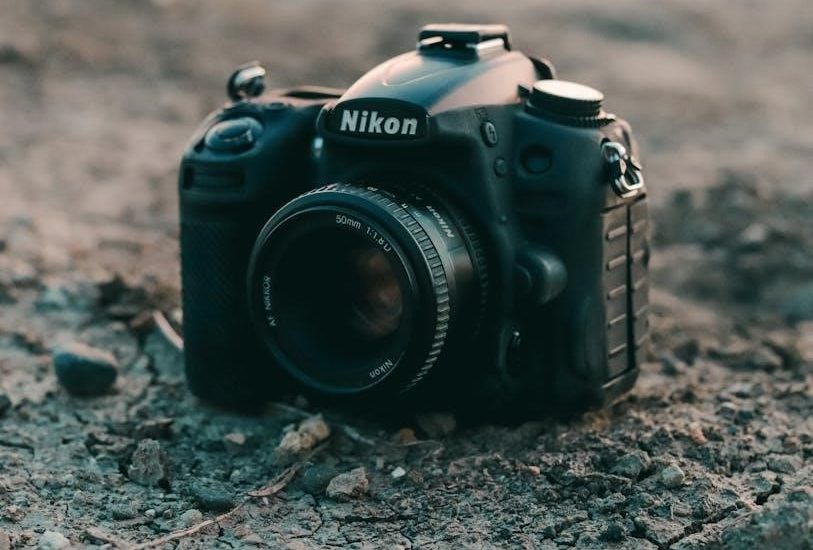
Nikon N80 Camera Manual: A Comprehensive Guide
Discover a wealth of resources for your Nikon N80, including free downloads from the Internet Archive,
detailed guides, and even repair manuals for electronics professionals.
The Nikon N80, also known as the F80 in some markets, represents a significant step forward in Nikon’s 35mm SLR technology. Released in the late 1990s, this camera quickly gained popularity among both amateur and professional photographers due to its blend of advanced features and user-friendly operation. It’s a robust, reliable, and versatile camera capable of producing high-quality images.
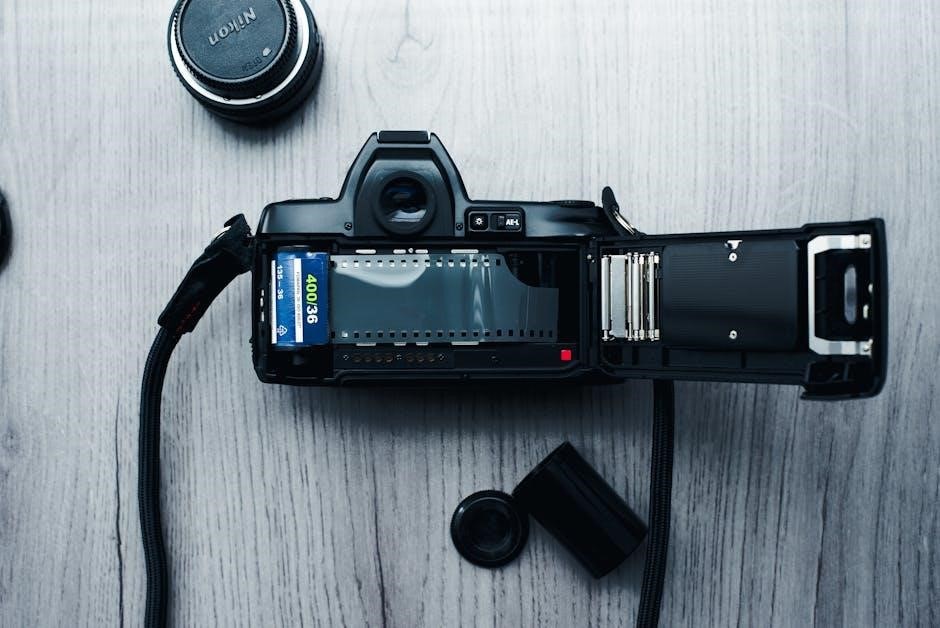
Finding a comprehensive Nikon N80 manual is crucial for unlocking the camera’s full potential. Whether you’re a seasoned photographer revisiting film or a newcomer exploring the world of analog photography, understanding the N80’s controls, functions, and settings is essential. Fortunately, numerous resources are available, from free downloadable PDFs on the Internet Archive to original factory instruction manuals available for purchase. This guide will navigate you through these resources, ensuring you have everything needed to master your Nikon N80.
Understanding the Nikon N80’s Key Features
The Nikon N80 boasts a sophisticated autofocus system with five focus points, offering flexibility in composing shots. Its multi-segment metering system ensures accurate exposure in various lighting conditions. The camera supports a range of shooting modes, including program, aperture-priority, shutter-priority, and full manual control, catering to different photographic styles.
A key feature is its ability to handle various film formats and ISO settings, providing versatility for diverse shooting scenarios. The N80 also includes advanced features like depth-of-field preview and a built-in diopter adjustment for viewfinder clarity. Accessing a detailed Nikon N80 manual is vital to fully grasp these capabilities. Resources like the Internet Archive offer downloadable manuals, while Etsy provides options for original factory instruction books, aiding in understanding and utilizing these features effectively.
Accessing the Nikon N80 Manual
Obtaining a Nikon N80 manual is crucial for maximizing the camera’s potential. The Internet Archive stands out as a primary resource, offering free download, borrow, and streaming options. You can find the manual available in PDF format, single-page processed JP2 ZIP files, and even torrent downloads.
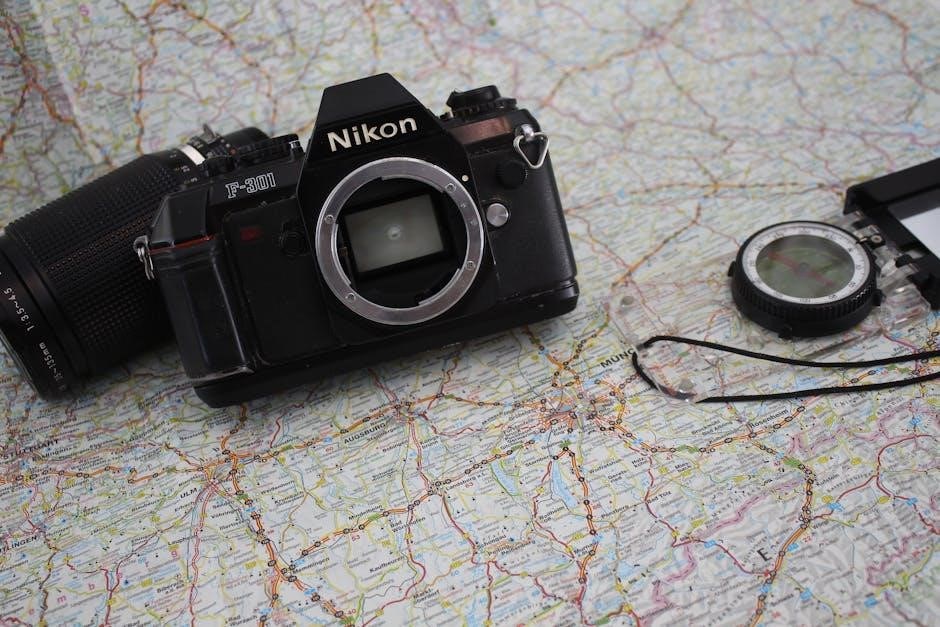
Several uploads by users like chris85, dating back to 2021 and 2022, ensure accessibility. Beyond the Internet Archive, consider exploring platforms like Etsy, where original factory instruction manuals are often available for purchase. Additionally, “The pip expanded guide to the Nikon F80 ー N80” by Matthew Dennis provides a comprehensive resource. These avenues guarantee you have the necessary documentation to operate and maintain your classic Nikon camera effectively.
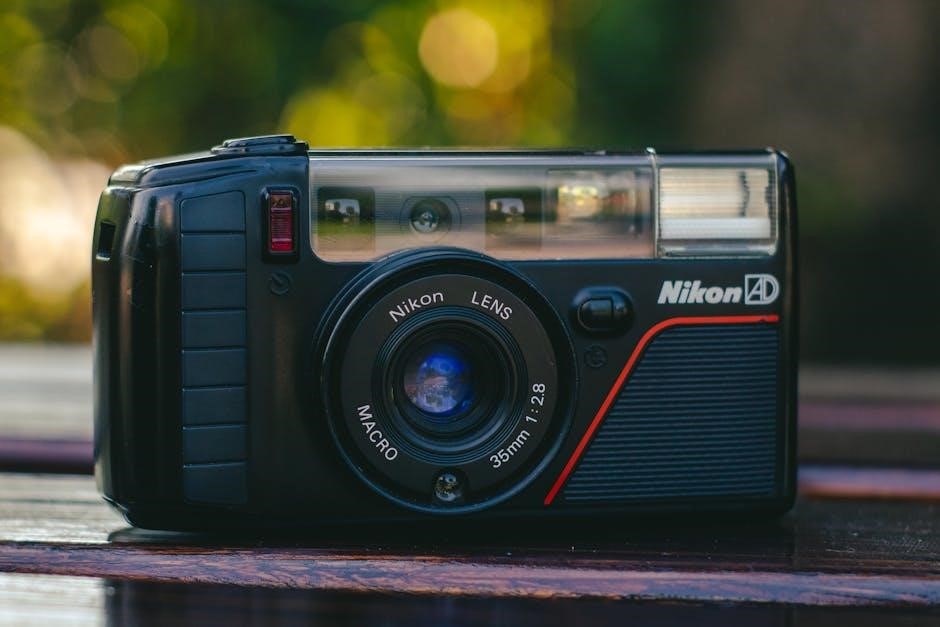
Free Download Options: Internet Archive
The Internet Archive provides a fantastic, no-cost avenue for accessing the Nikon N80 camera manual. Users can download the manual as a PDF file for convenient viewing on any device. Alternatively, single-page processed JP2 ZIP files are available, offering a different format for archival or specific editing needs. For those preferring peer-to-peer sharing, torrent download options are also present.
Currently, 15 files are available for download, alongside 6 original items related to the manual. These resources, uploaded by contributors like chris85 in May 2022, ensure a readily available source of information. The platform also hosts manuals for related models like the Nikon F80, broadening your access to helpful documentation.
Purchasing a Physical Nikon N80 Manual (Etsy)
For those who prefer a tangible copy, Etsy presents a marketplace for acquiring an original, factory-issued Nikon N80 instruction manual. These listings typically offer the genuine article – a physical camera instruction book – providing a classic, hands-on experience. Sellers on Etsy often specialize in vintage camera materials, ensuring authenticity and quality;
These manuals are ideal for collectors or photographers who appreciate the feel of a physical guide. Listings frequently highlight the manual’s condition, allowing buyers to assess its suitability. While prices vary depending on condition and seller, Etsy provides a convenient platform to locate and purchase this essential accessory for your Nikon N80.
Nikon N80 Camera Controls & Functions
The Nikon N80 boasts a comprehensive array of controls designed for both novice and experienced photographers. Understanding these functions is key to unlocking the camera’s full potential. Key controls include the mode dial, allowing selection of various exposure modes – from automatic programs to full manual control. The camera features a prominent shutter speed dial and aperture control, essential for manual operation.
Furthermore, the N80 incorporates a multi-function joystick for navigating menus and selecting autofocus points. Dedicated buttons provide quick access to frequently used settings like ISO and white balance. The manual details the location and operation of each control, ensuring users can efficiently adjust settings and capture stunning images.
Exposure Modes: Auto & Manual
The Nikon N80 offers a versatile range of exposure modes catering to diverse shooting scenarios; Automatic modes, such as Programmed Auto, Aperture Priority, and Shutter Priority, simplify operation for beginners, allowing the camera to handle settings while the photographer focuses on composition. Programmed Auto balances shutter speed and aperture for general use.
For experienced users, full Manual mode provides complete control over both aperture and shutter speed, enabling creative adjustments and precise exposure. The manual thoroughly explains each mode, detailing how the camera responds to different settings. Understanding these modes is crucial for achieving desired photographic effects and mastering the N80’s capabilities.
Focusing System: Autofocus Points & Modes
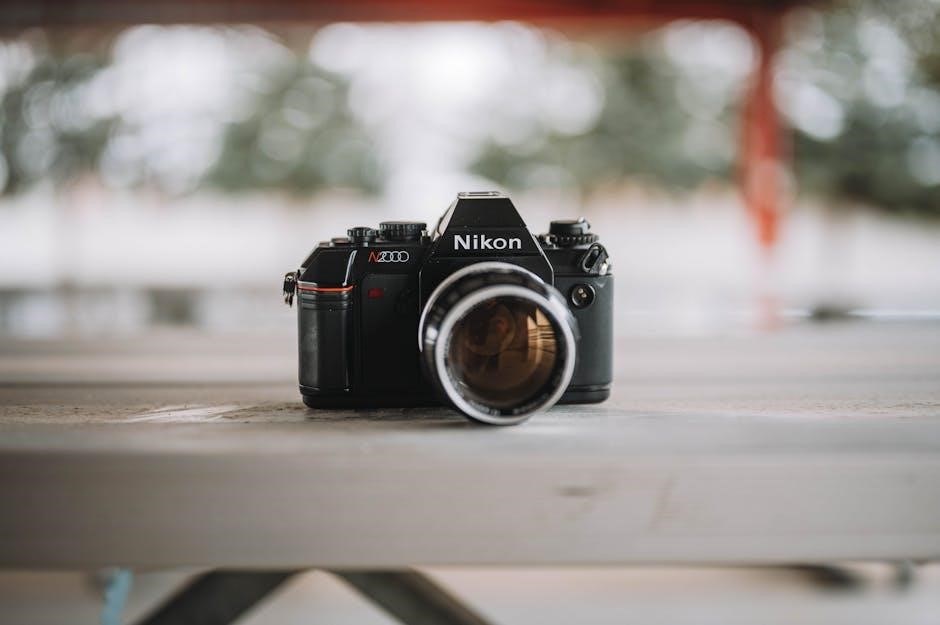
The Nikon N80 features a 5-area Multi-CAM autofocus system, providing flexibility in subject tracking and selection. These autofocus points allow photographers to prioritize focus on specific areas within the frame. The manual details how to select individual focus points or allow the camera to automatically choose one based on the scene.
Focus modes include Single Servo (AF-S) for stationary subjects and Continuous Servo (AF-C) for moving subjects. Understanding when to utilize each mode is vital for capturing sharp images. The manual also explains focus lock functionality, enabling photographers to recompose shots while maintaining focus on the initial subject. Mastering these features enhances the N80’s focusing precision.
Metering Modes: Evaluating Light
The Nikon N80 offers three primary metering modes: Matrix, Center-weighted average, and Spot. Matrix metering evaluates the entire scene to determine exposure, ideal for general photography. Center-weighted average prioritizes the center of the frame, suitable for portraits or subjects in the middle ground. Spot metering measures light from a very small area, perfect for challenging lighting situations or specific subject illumination.
Understanding how each mode assesses light is crucial for accurate exposures. The manual thoroughly explains scenarios where each metering mode excels, helping photographers achieve desired results. Exposure compensation is also covered, allowing for fine-tuning of the camera’s metering system. Proper light evaluation ensures well-exposed photographs consistently.
Film Loading and Rewinding
The Nikon N80’s film loading process is straightforward, detailed clearly within the camera manual. First, open the back cover and insert the 35mm film canister into the film chamber. Thread the film leader to the take-up spool, ensuring it engages correctly. Advance the film a couple of times and check that the rewind knob rotates, confirming proper loading.
Rewinding the film is equally simple. Press the film rewind button on the camera’s base. Rotate the rewind knob in the direction of the arrow until you feel the film release from the take-up spool. The manual emphasizes avoiding forceful rewinding to prevent damage. Proper film handling ensures successful shooting and preservation of your images.
Supported Film Types & ISO Settings
The Nikon N80 is designed to accommodate a wide range of 35mm film types, including color negative film, color slide film, and black and white film. It supports various film speeds, commonly referred to as ISO ratings. The camera’s ISO settings range from 25 to 3200, allowing for flexibility in different lighting conditions.
Setting the ISO is crucial for accurate exposure. The N80 allows you to manually set the ISO using the dial on the top panel. Ensure the selected ISO matches the ISO of the film loaded in the camera. Incorrect ISO settings will result in under or overexposed photographs. Refer to the manual for detailed instructions on setting the ISO and understanding its impact on your images.
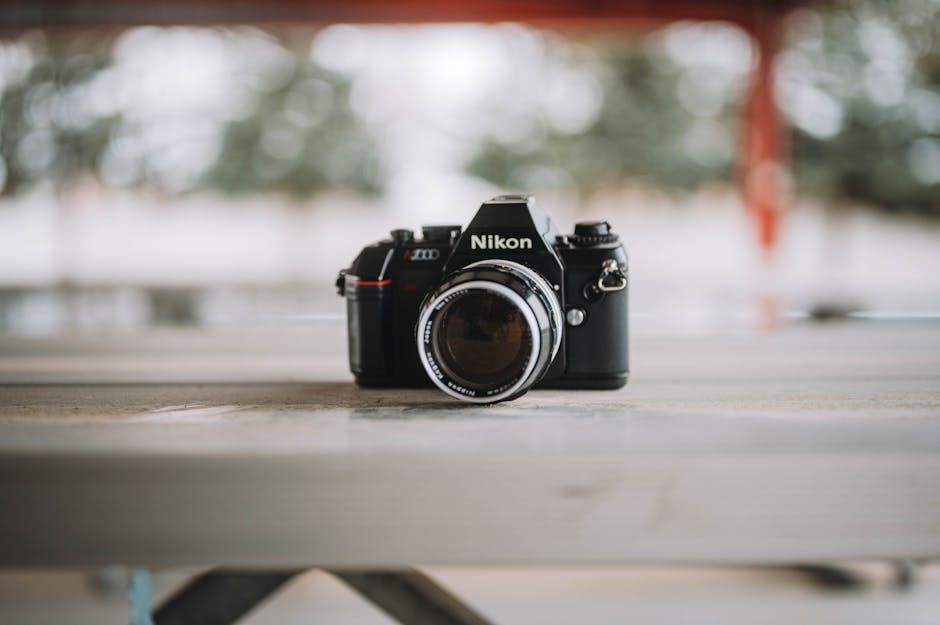
Navigating the Nikon N80’s Menu System
The Nikon N80 features a user-friendly menu system accessed through the LCD screen on the camera’s top panel. Utilizing the directional buttons and the OK button, you can scroll through and select various settings. The menu is logically organized into categories, including Custom Functions, Digital Features, and Setup options.
Understanding the menu structure is key to customizing the camera to your preferences. You can adjust settings like autofocus behavior, metering mode, and flash control. The manual provides a detailed explanation of each menu item and its corresponding functions. Take time to explore the menu and familiarize yourself with the available options to unlock the full potential of your N80.
Troubleshooting Common Issues
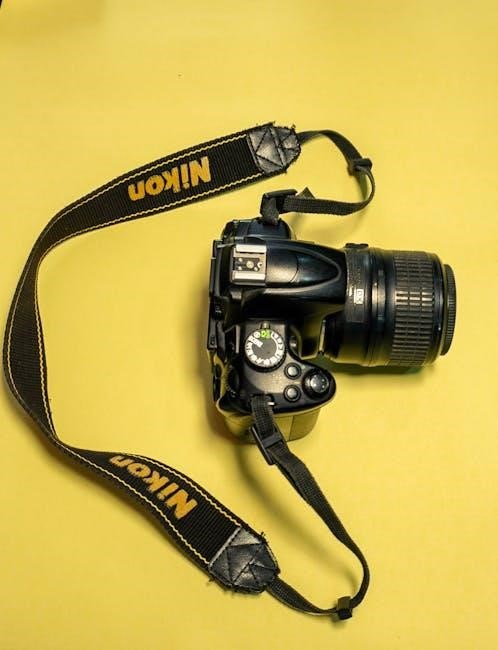
Encountering problems with your Nikon N80? Several common issues have readily available solutions. If the camera won’t power on, check the batteries and ensure they are correctly installed. For autofocus malfunctions, verify the autofocus mode is appropriate for the shooting situation and the lens is properly mounted.
Exposure problems can often be traced to incorrect metering mode selection or improper ISO settings. Refer to the manual for guidance on these settings. If error codes appear on the LCD, consult the error code section within the manual to understand the issue and potential fixes. Repair manuals are available for more complex issues, assisting electronics experts in diagnosing and resolving deeper problems.
Error Codes and Their Meanings
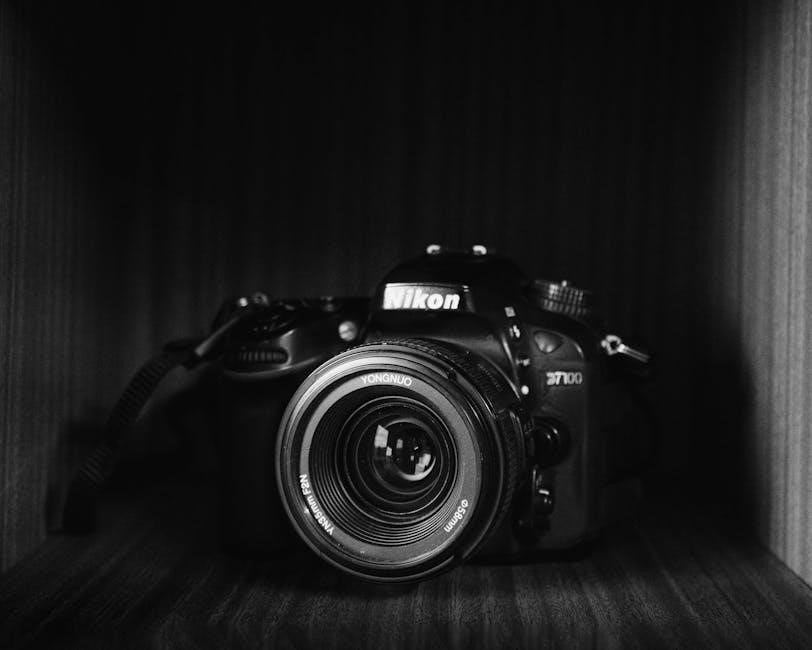
Decoding the Nikon N80’s error messages is crucial for effective troubleshooting. While specific codes aren’t detailed in readily available snippets, the service manual provides a comprehensive list. Common errors might indicate issues with the film transport mechanism, shutter operation, or internal communication failures.
Understanding these codes allows for targeted repairs, potentially avoiding costly professional servicing. The repair manual, geared towards electronics experts, offers detailed explanations and diagnostic procedures for each error. Referencing the manual is essential when an error message appears on the camera’s LCD, as it pinpoints the source of the problem and suggests possible solutions or repair steps.
Battery Information & Replacement
The Nikon N80 utilizes CR2032 batteries to power its electronic functions, including the LCD display and memory settings. Proper battery handling is essential for optimal camera performance and longevity. When replacing the battery, ensure the camera is switched off to prevent data loss or potential damage.
Always use high-quality CR2032 batteries from reputable brands to guarantee reliable power. Avoid mixing old and new batteries, and replace all batteries simultaneously for consistent performance. Low battery levels can cause erratic behavior or prevent certain features from functioning correctly. Regular battery checks are recommended, especially during extended periods of inactivity.
Nikon N80 Repair Information
For those encountering issues with their Nikon N80, several repair resources are available. Dedicated service manuals, encompassing schematics and repair information, can be downloaded for electronics experts. These manuals provide detailed guidance for diagnosing and resolving common problems, though they require a strong technical background.
Alternatively, professional camera repair services offer expertise in fixing a wide range of issues, from shutter malfunctions to lens mount problems. Factory service manuals for the N80, F80, and F80s cameras are accessible, aiding technicians in their repair efforts. Consider the cost of repair versus replacement before proceeding, as some issues may be more economically addressed by acquiring a functioning camera.
Service Manual Availability
The Nikon N80’s service manual is readily available for those seeking in-depth repair information. Notably, it’s often bundled with service manuals for the closely related F80 and F80s models, offering comprehensive coverage for this camera family. These manuals, designed for experienced electronics technicians, include detailed schematics, component layouts, and troubleshooting guides.
Sources for obtaining these manuals include dedicated online platforms specializing in electronics repair documentation. Downloadable versions are frequently found, providing immediate access to crucial repair data. However, be aware that these manuals assume a high level of technical proficiency and are not intended for novice users. Proper tools and a solid understanding of electronics are essential for successful repairs;
Resources for Camera Repair Experts
Experienced camera technicians repairing the Nikon N80 will find several valuable resources. Firstly, dedicated online forums and communities specializing in camera repair offer a platform for knowledge sharing and troubleshooting assistance. Secondly, websites offering downloadable service manuals, schematics, and EEPROM data are crucial for diagnosing and resolving complex issues.
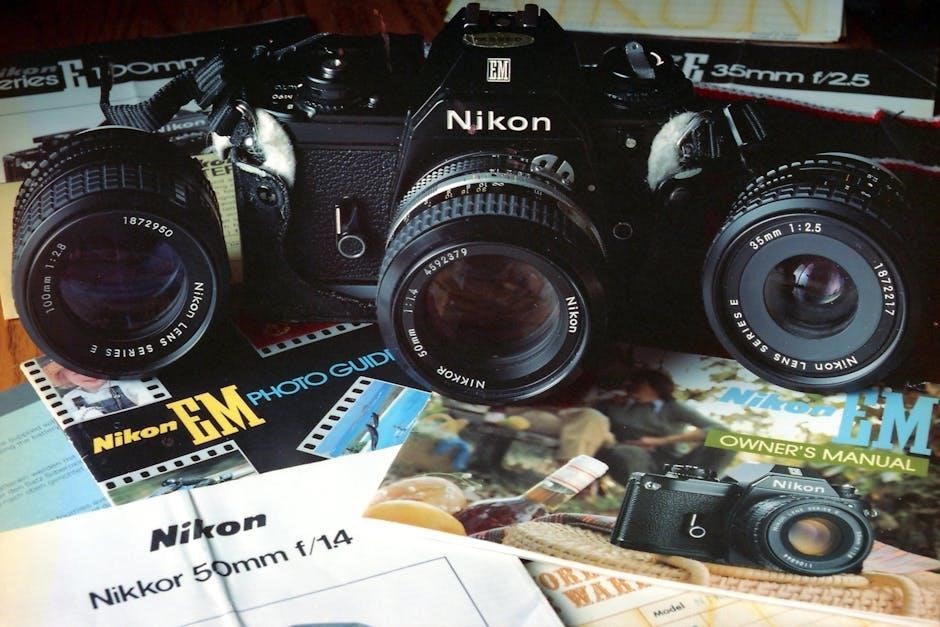
Furthermore, suppliers of camera parts – including those specializing in vintage or discontinued models – can provide replacement components essential for successful repairs. Access to these resources, combined with a solid understanding of electronics and mechanical systems, empowers technicians to restore the N80 to full functionality. Remember that specialized tools and testing equipment are often necessary for accurate diagnosis and repair.
Comparing the N80 to the F80/F80S
The Nikon N80 (also known as the F80 in some markets) shares significant similarities with the F80 and F80S models, creating a closely related family of cameras. Notably, the N80/F80/F80S all feature a robust autofocus system, multiple metering modes, and a comprehensive range of exposure controls. However, key distinctions exist.
The N80, or N80QD, incorporates a built-in quartz date/time function, absent in the standard F80. Additionally, minor cosmetic and internal component variations differentiate the models. Service manuals often cover all three cameras due to their fundamental similarities, simplifying repair procedures. Ultimately, users can often utilize manuals and resources intended for the F80 or F80S with the N80, and vice versa, due to their shared core functionality.
Advanced Techniques with the Nikon N80
Unlock the full potential of your Nikon N80 by exploring advanced photographic techniques. Mastering external flash units expands creative control over lighting, enabling dramatic effects and improved low-light performance. Utilize the camera’s custom functions to personalize settings, streamlining your workflow and adapting the N80 to your specific shooting style.
Experiment with different focusing modes and autofocus points to achieve precise sharpness, particularly crucial for action or portrait photography. Delve into the intricacies of metering modes to accurately evaluate light and achieve optimal exposure in challenging conditions. Furthermore, understanding the interplay between aperture, shutter speed, and ISO allows for nuanced control over depth of field and motion blur, elevating your images beyond basic snapshots.
Using External Flashes
Enhance your Nikon N80’s capabilities with external flash units, unlocking a world of creative lighting possibilities. The N80 supports various flash modes, including TTL (Through-The-Lens) for automatic exposure and manual control for precise adjustments. Utilizing off-camera flash, triggered wirelessly, allows for sophisticated lighting setups, sculpting light and adding depth to your images.
Explore techniques like bounce flash, directing light off walls or ceilings for softer illumination, and rear-curtain sync, freezing motion with a flash burst at the end of the exposure. Understanding flash compensation is vital for fine-tuning exposure, preventing over or underexposure. Remember to consult the N80’s manual for specific flash compatibility and settings, maximizing the synergy between camera and flash for stunning results.
Custom Functions & Personalization
The Nikon N80 offers a range of custom functions, allowing photographers to tailor the camera to their individual shooting style and preferences. These functions encompass settings like autofocus behavior, metering options, and button assignments, providing a personalized shooting experience. Explore the menu system to discover options for customizing the self-timer, exposure delay, and film advance mode.
Personalization extends to the viewfinder display, enabling you to select which information is visible during shooting. Adjusting the diopter correction ensures a sharp and clear view for accurate composition. By leveraging these custom functions, you can streamline your workflow, reduce distractions, and optimize the N80 for your specific photographic needs, ultimately enhancing your creative control.