
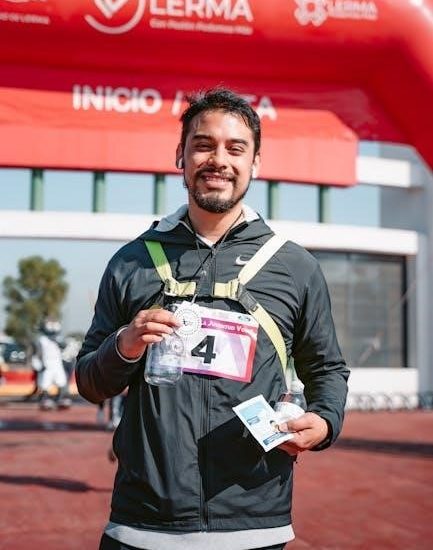
Embarking on a half marathon journey requires dedication! This 4-week plan, leveraging resources like Nike Run Club and Hal Higdon, offers a focused approach.
St. Jude Heroes provides schedules, while Garmin offers beginner plans, ensuring a structured path to 13.1 miles, even for newcomers.
What is a Half Marathon?
A half marathon is a 13.1-mile (21.1-kilometer) road running event, significantly challenging yet achievable with proper preparation. It’s double the distance of a 10K and half the distance of a full marathon, making it a popular goal for runners of all levels.
This distance demands a blend of endurance and speed, requiring a structured training plan. Resources like those from Hal Higdon and the Nike Run Club app provide guidance.
Beginner plans, often 14-weeks long, can be adapted into focused 4-week schedules for those with some existing running base, as suggested by St. Jude Heroes.
Why Choose a 4-Week Plan?
A 4-week plan is ideal for runners with a pre-existing base, seeking a focused boost for an upcoming half marathon. It’s not a beginner’s “couch-to-half marathon” approach, but a refinement strategy.
Leveraging resources like Nike Run Club and Garmin’s beginner schedules, this timeframe concentrates on increasing mileage and intensity.
It’s perfect if you’ve consistently run shorter distances and want a structured build-up, or if you’re returning from a break, as highlighted by St. Jude Heroes’ adaptable plans.

Assessing Your Current Fitness Level
Honest self-assessment is key! Determine if you’re a beginner or intermediate runner, considering your weekly mileage and recent running history for optimal planning.
Beginner vs. Intermediate Runner
Distinguishing between beginner and intermediate is crucial for a safe and effective plan. A beginner might be new to consistent running, completing less than 10 miles weekly, or transitioning from “couch to 5k”.
They require a slower build-up, prioritizing foundational fitness and injury prevention. Conversely, an intermediate runner consistently runs 10-20 miles per week, with some experience in longer distances.
They can handle increased mileage and intensity, incorporating tempo runs and interval training more readily. Hal Higdon’s plans cater to both levels, offering tailored schedules for success.
Establishing a Baseline Run
Before diving into the 4-week plan, a baseline run is essential. This initial run assesses your current fitness level, providing a starting point for progression. Aim for a comfortable 3-mile run at a conversational pace – you should be able to talk without gasping for air.
Record your time and how you feel. This data informs your training intensity and helps prevent overexertion. Nike Run Club app can track your run, providing valuable metrics.

Honest self-assessment is key; don’t push too hard initially. This run establishes a foundation for building mileage safely and effectively.

Week 1: Building a Foundation
Week 1 focuses on establishing a base. Incorporate cross-training, short easy runs, and a 3-mile long run, alongside essential rest and recovery days.
Monday: Cross-Training & Strength
Kickstart your week with a focus on building overall fitness! Dedicate this day to cross-training activities like Pilates or a brisk 30-minute walk, as suggested by Garmin’s beginner schedule.
Complement this with strength training exercises. Strengthening key muscle groups will support your running form and prevent injuries throughout the 4-week plan.
Prioritize exercises targeting your core, legs, and glutes. This foundational work is crucial for handling the increasing mileage and intensity in the weeks ahead, setting you up for success!
Tuesday: Short, Easy Runs
Focus on building endurance with comfortable-paced runs! Following the beginner plans from Garmin, aim for an easy run, gradually increasing the distance each week.
These runs should feel conversational, allowing you to maintain a relaxed pace and build aerobic capacity without excessive strain.
Prioritize consistency over speed. This is about logging miles and preparing your body for the longer runs ahead. Remember to listen to your body and adjust the distance as needed!
Wednesday: Rest or Active Recovery
Recovery is crucial for preventing injuries and maximizing performance! Incorporate either complete rest or active recovery into your Wednesday routine, as suggested by various beginner plans.
Active recovery could include a brisk walk, similar to Garmin’s recommendations, or light cross-training for 40 minutes.
This helps flush out lactic acid and promotes blood flow without placing significant stress on your muscles. Prioritize listening to your body and choosing what feels best for your recovery needs.
Tempo runs build endurance and lactate threshold! Begin introducing tempo runs this week, gradually increasing duration in subsequent weeks.
Start with a manageable tempo segment, focusing on comfortably hard effort – a pace you can sustain for 20-30 minutes.
Warm-up with easy jogging, followed by the tempo portion, and cool down afterward. This type of run, vital in plans like Hal Higdon’s, prepares your body for sustained faster paces during the half marathon.
Friday: Rest
Prioritize recovery with a complete rest day! Following Thursday’s tempo run, your body needs time to repair and rebuild muscle tissue.
Avoid strenuous activity; instead, focus on passive recovery. This is crucial, as highlighted in various beginner plans from sources like Garmin and St. Jude Heroes.
Rest isn’t laziness; it’s an integral part of the training process, preventing injury and maximizing performance gains. Adequate rest ensures you’re prepared for the weekend’s long run.
Saturday: Long Run ⏤ 3 Miles

Kickstart your weekend with a 3-mile long run! This distance builds endurance, a cornerstone of half marathon preparation, as emphasized by Hal Higdon’s beginner plans.
Maintain a conversational pace; focus on completing the distance comfortably, not speed. Hydrate well before, during, and after the run.
Listen to your body; walk breaks are perfectly acceptable, especially as you build mileage. This initial long run, supported by resources like Nike Run Club, establishes a foundation for future increases.
Sunday: Active Recovery ‒ Walking
Prioritize recovery with a gentle walking session! Active recovery, like a 30-minute brisk walk, aids muscle repair and reduces soreness after Saturday’s long run.
This complements plans from Garmin and St. Jude Heroes, emphasizing balanced training. Walking promotes blood flow without stressing your body further.
Avoid complete rest; light activity accelerates recovery. Consider a leisurely stroll in nature, focusing on mindful movement and enjoying the benefits of fresh air; This prepares you for the week ahead!

Week 2: Increasing Mileage
Build endurance by gradually increasing your running distance! This week focuses on longer easy runs and introduces interval training for improved speed and stamina.
Monday: Strength Training Focus
Kickstart your week with a dedicated strength training session! This isn’t just about building muscle; it’s about injury prevention and enhancing running efficiency. Focus on exercises targeting core stability, leg strength, and glute activation.
Consider squats, lunges, planks, and calf raises. Pilates, as suggested by Garmin’s beginner schedule, is also an excellent option. Remember proper form is crucial to avoid strain. Strength work supports your increasing mileage throughout the week, preparing your body for the demands of the half marathon training plan.
Tuesday: Easy Runs ‒ Increased Distance
Today’s focus is on building endurance with an easy-paced run, gradually increasing the distance from the previous week. Maintain a conversational pace – you should be able to comfortably hold a conversation while running. This isn’t about speed; it’s about time on your feet.
Garmin’s beginner plan suggests a brisk walk or easy run. Listen to your body and don’t push too hard, especially as mileage increases. This steady progression is key to avoiding injury and preparing for the longer runs later in the week, vital for your 4-week plan.
Wednesday: Cross-Training
Today is dedicated to active recovery and strengthening supporting muscles through cross-training. This could include swimming, cycling, yoga, or Pilates – activities that provide a break from the impact of running while maintaining fitness.
Garmin’s beginner schedule recommends 30-40 minutes of cross-training. This helps prevent overuse injuries and improves overall athletic performance. Focus on low-impact exercises to allow your running muscles to recover, preparing you for the intensity of Thursday’s workout within your 4-week half marathon training plan.
Thursday: Interval Training
Interval training is crucial for boosting speed and endurance. Alternate between high-intensity bursts and recovery periods. A sample workout could involve running hard for 400 meters, followed by a 400-meter jog or walk to recover.
Repeat this sequence 6-8 times. This type of training improves your cardiovascular fitness and running economy. Remember to warm up before and cool down after your intervals. This builds upon the foundation established in your 4-week half marathon training plan, preparing you for a faster race pace.
Rest is a non-negotiable component of any effective training plan. Your body needs time to recover and rebuild after the stresses of running. Friday is dedicated to complete rest – no running, cross-training, or intense activity.
Prioritize sleep and proper nutrition. This allows your muscles to repair and glycogen stores to replenish. Ignoring rest days can lead to overtraining, injuries, and diminished performance. Embrace this recovery period as a vital part of your 4-week half marathon preparation, ensuring you’re fresh for the weekend’s challenges.
Saturday: Long Run ‒ 5 Miles
Saturday’s long run is crucial for building endurance. This week, aim for a 5-mile run at a conversational pace – you should be able to hold a conversation comfortably. Focus on maintaining consistent effort throughout, rather than speed.
Proper hydration and fueling are essential before, during, and after the run. Utilize resources like the Nike Run Club app to track your progress. This distance prepares your body for the increasing demands of the half marathon, strengthening your cardiovascular system and leg muscles.
Sunday: Yoga or Stretching
Prioritize recovery with a dedicated yoga or stretching session. After Saturday’s 5-mile run, your muscles need attention! Focus on major muscle groups used in running – hamstrings, quads, calves, and hip flexors.
Gentle stretching improves flexibility and reduces muscle soreness. Yoga enhances recovery through mindful movement and breathing. Incorporate poses that promote relaxation and balance. This active recovery aids in preventing injuries and prepares your body for the week ahead, supporting your half marathon training.

Week 3: Peak Mileage & Intensity
This week challenges you with the highest mileage! Core strengthening, tempo runs, and a 7-mile long run build endurance and speed, preparing you for the final taper.
Monday: Core Strengthening
Prioritize core stability today! A strong core is fundamental for efficient running form and injury prevention. Focus on exercises like planks (holding for 30-60 seconds, repeat three times), Russian twists (15-20 repetitions per side, three sets), and bicycle crunches (20 repetitions per side, three sets).
Consider incorporating Pilates, as suggested by Garmin’s beginner schedule, to further enhance core engagement. Remember to maintain proper form throughout each exercise to maximize benefits and avoid strain. This foundational work will support your longer runs and intensity sessions later in the week.
Tuesday: Easy Run with Strides
Today’s focus is a conversational-paced easy run, building endurance without excessive strain. Aim for a comfortable distance, maintaining a pace where you can easily hold a conversation. Follow this with 4-6 strides, short bursts of fast running (approximately 100 meters) with full recovery between each.
Strides improve running economy and form. These aren’t all-out sprints, but controlled accelerations. This combination of easy mileage and speed work prepares your body for the tempo run and long run ahead, enhancing overall performance.
Wednesday: Recovery Run
Prioritize active recovery with a short, very easy run today. This isn’t about pushing pace or distance; it’s about flushing out metabolic waste and promoting blood flow to aid muscle repair. Keep the intensity extremely low, focusing on a comfortable, conversational effort.
Think of it as a gentle jog, shorter than your typical easy runs. This helps prevent soreness and prepares you for the more intense workouts later in the week, ensuring you remain fresh and ready to tackle the challenges ahead.
Thursday: Tempo Run ‒ Longer Duration
Today’s tempo run builds on your previous experience, extending the sustained effort. Begin with a 10-15 minute warm-up of easy jogging. Then, settle into a comfortably hard pace – one you can maintain for roughly 20-25 minutes. This should feel challenging, but not an all-out sprint.
Focus on consistent effort, and conclude with a 10-15 minute cool-down. Tempo runs improve your lactate threshold, enhancing endurance. Proper pacing is key; avoid starting too fast and burning out before the duration is complete.
Recovery is paramount! Friday is a dedicated rest day, crucial for muscle repair and preventing injury. Avoid strenuous activity; instead, prioritize sleep and allow your body to recuperate from the week’s training load. Active recovery, like gentle walking, is acceptable if you feel restless, but keep it light.
Nutrition remains important – focus on replenishing glycogen stores and consuming protein to aid muscle recovery. Listen to your body; if you’re feeling particularly fatigued, extend the rest period. A well-rested body performs better!
Saturday: Long Run ⏤ 7 Miles
This is your peak long run! Saturday demands a 7-mile effort, building endurance vital for the half marathon. Maintain a conversational pace, focusing on completing the distance comfortably. Hydrate well before, during, and after the run, and consider carrying energy gels or chews for sustained fuel.
Pay attention to your body; slow down or walk if needed. Proper pacing is key! This run simulates race conditions, preparing you mentally and physically. Remember to cool down with stretching post-run.
Sunday: Light Cross-Training
Recovery is paramount! Sunday calls for light cross-training, promoting blood flow and aiding muscle recovery after Saturday’s long run. Opt for low-impact activities like brisk walking, swimming, or cycling for 30-40 minutes. Pilates is also a great option, strengthening core muscles.
Avoid strenuous exercise; the goal is active recovery, not further fatigue. Listen to your body and adjust the intensity accordingly. This prepares you for the final week’s taper, ensuring you’re fresh for race day!

Week 4: Tapering & Race Preparation
Reduce mileage this week! Focus on rest, short runs, and pre-race nutrition. Prioritize hydration and mental preparation for optimal race-day performance and success.

Monday: Short, Easy Run
Kick off the week with a gentle, restorative run. Aim for a distance significantly shorter than your longest runs – approximately 2-3 miles is ideal. Maintain a conversational pace; you should be able to easily hold a conversation throughout the entire run.
This isn’t about pushing your limits, but rather loosening your muscles and promoting blood flow after the weekend’s activity. Focus on good form and listen to your body. If you feel any discomfort, slow down or walk. Consider this a recovery run, preparing you for the week ahead.
Tuesday: Rest
Prioritize complete rest and recovery today. Your body needs time to rebuild and adapt after Monday’s run and prepare for upcoming workouts. Avoid any strenuous activity; this means no running, intense cross-training, or heavy lifting.
Focus on passive recovery – activities like gentle stretching, foam rolling, or simply relaxing. Adequate sleep is crucial; aim for 7-9 hours. Proper nutrition and hydration are also essential for muscle repair and replenishment. Rest isn’t laziness; it’s a vital component of effective training!
Wednesday: Short Shakeout Run
Today’s run is a “shakeout” – a very easy, short distance run. Aim for 20-30 minutes at a conversational pace. The goal isn’t to push yourself, but to loosen your muscles and mentally prepare for race day. Keep the effort extremely low; you should feel comfortable holding a conversation throughout.
Focus on good form and efficient running mechanics. This run helps flush out any lingering stiffness and boosts confidence. Avoid any speed work or hills. Hydrate well before and after, and listen to your body – stop if you feel any pain.
Thursday: Rest
Today is a crucial rest day! Your body needs time to recover and rebuild after the intensity of the previous runs. Completely abstain from running or strenuous activity. Instead, focus on active recovery like gentle stretching or a leisurely walk if desired.
Prioritize sleep and proper nutrition. Hydrate consistently throughout the day. Rest is as important as the runs themselves; it prevents injury and allows your muscles to adapt. Don’t underestimate the power of doing absolutely nothing for your training progress!
Friday: Pre-Race Nutrition & Hydration
Fueling correctly is paramount! Focus on carbohydrate loading – increase your intake of pasta, rice, and potatoes. Avoid high-fiber foods to prevent digestive issues during the race. Hydrate consistently throughout the day, sipping water or electrolyte drinks.
Resist the urge to try new foods. Stick to what your stomach knows and tolerates well. Prepare your race-day breakfast and snacks in advance. Proper nutrition and hydration maximize energy stores and ensure optimal performance on race day!
Saturday: RACE DAY!
The culmination of your 4-week training! Arrive early to allow ample time for parking, bag check, and warm-up. Stick to your pre-planned nutrition and hydration strategy. Start conservatively, avoiding a fast initial pace.
Focus on maintaining a consistent effort throughout the race. Utilize aid stations for water and electrolytes. Embrace the energy of the crowd! Remember your training and enjoy the experience. Crossing that finish line is a testament to your dedication and hard work!
Sunday: Post-Race Recovery
Congratulations on completing your half marathon! Immediate post-race focuses on rehydration and refueling with carbohydrates and protein. Gentle walking aids muscle recovery and prevents stiffness. Prioritize rest and avoid strenuous activity for at least a day or two.
Listen to your body and address any soreness with ice or gentle stretching. Continue hydrating adequately in the days following the race. Proper recovery is crucial to prevent injury and prepare for future running endeavors. Celebrate your achievement!

Resources & Tools
Enhance your training with valuable tools! Explore the Nike Run Club app, Hal Higdon’s plans, and St. Jude Heroes schedules for guidance and motivation.
Nike Run Club App
The Nike Run Club app is a fantastic, free resource for half marathon preparation. It provides audio-guided runs, personalized coaching, and adaptable training plans suitable for various levels, including beginners.
Users on Reddit highly recommend it, with many achieving personal bests utilizing its structured programs. The app’s accessibility and motivational features make it ideal for following a 4-week plan.
It tracks your progress, offers encouragement, and integrates seamlessly with other fitness trackers, providing a comprehensive training experience. Download it today and start running!
Hal Higdon Training Plans
Hal Higdon offers a wealth of free half marathon training plans catering to all skill levels, from novice to experienced runners. These plans are renowned for their clarity and effectiveness, providing a structured path to race day success.
Reddit users and fitness experts consistently recommend Higdon’s beginner plans as a solid foundation for new half marathoners. They emphasize a gradual increase in mileage and incorporate rest days for optimal recovery.
Explore his website for a plan that aligns with your current fitness level and goals, and prepare to cross that finish line!
St. Jude Heroes Training Schedules
St. Jude Heroes provides comprehensive half marathon training schedules designed to support runners of all abilities, while simultaneously raising funds for a vital cause. Their plans are particularly beneficial for those seeking a structured approach with a charitable component.
The organization offers a beginner plan, but also suggests adding a 6-week build-up for runners with some experience aiming to improve their performance.
These schedules emphasize consistent training and gradual progression, making them accessible and effective for achieving your half marathon goals while supporting St. Jude Children’s Research Hospital.